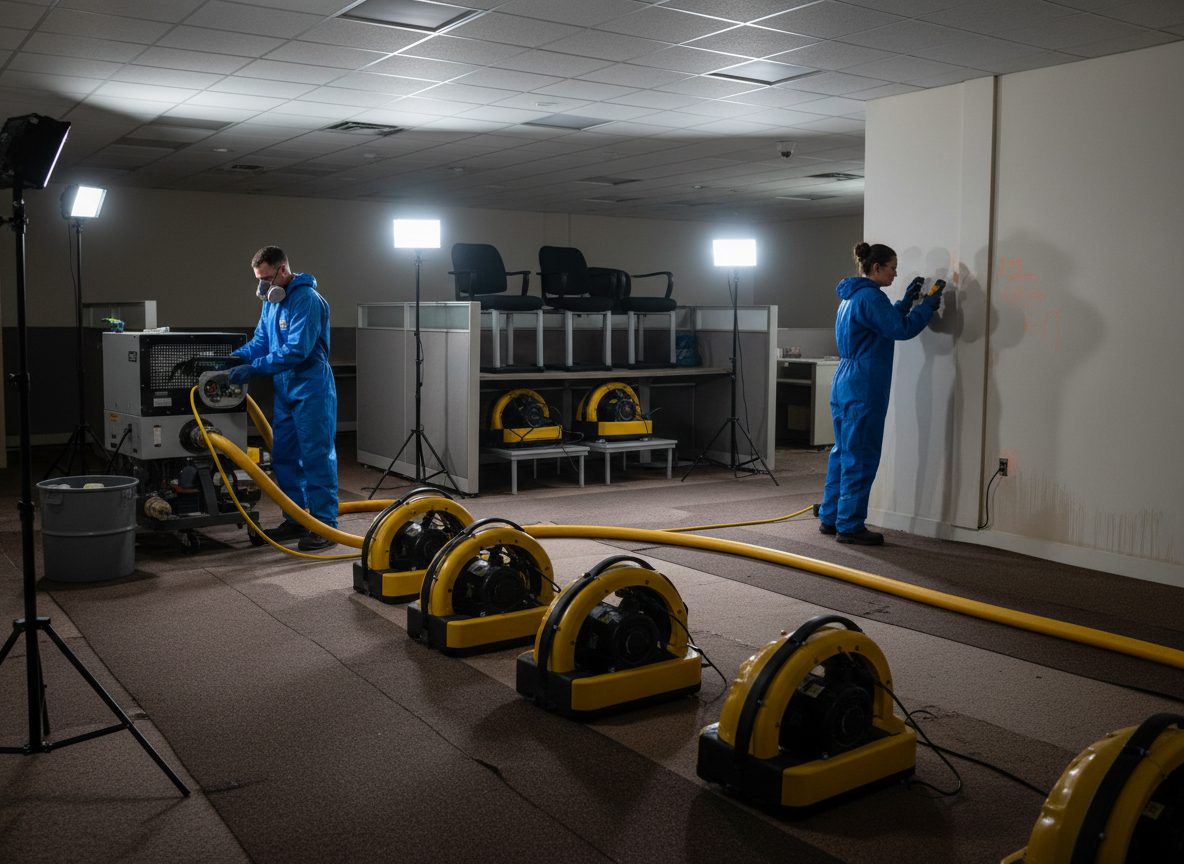
Tilton sits right along the Winnipesaukee River with many older homes built before 1950 on narrow lots off Central Street and Laconia Road. Winter snow loads followed by spring thaw often push water into stone foundations and crawl spaces that were never designed with modern drainage. When that happens, crews from Franklin respond quickly to extract water before it reaches finished basements or damages electrical panels common in these houses.
Access to Tilton properties can be tight, especially on side streets near the Tilton School campus or behind the older commercial buildings along Main Street. Trucks and equipment must navigate tight driveways and shared lots, so smaller portable extractors and moisture meters become essential. Summer thunderstorms can also overwhelm the storm drains that empty into the river, creating sudden standing water in low yards along the Tilton-Northfield line.
Residents in the Tilton area know that once ice dams form on older roofs, meltwater finds every seam. Restoration teams familiar with Merrimack County housing stock focus first on hidden wall cavities and subflooring that stay wet long after visible puddles disappear.
Around Tilton
We regularly work near:
- 📍Tilton School
- 📍Winnipesaukee River
- 📍Tilton Town Hall
- 📍Central Street
- 📍Tilton-Northfield Bridge
Water Damage Restoration in Tilton — Local Notes
- •Many Tilton homes built between 1890 and 1940 have fieldstone foundations that crack and seep during spring melt from the Winnipesaukee River watershed.
- •Narrow lots along Laconia Road and side streets near Tilton School limit the size of equipment that can reach the rear of properties, requiring more handheld drying tools.
- •Ice dams are common on the steep roofs typical of Tilton's Victorian and Cape-style houses, sending water behind gutters and into attic insulation.
- •Storm drains along Central Street frequently back up after heavy summer rain because they tie into the same system that feeds the river.