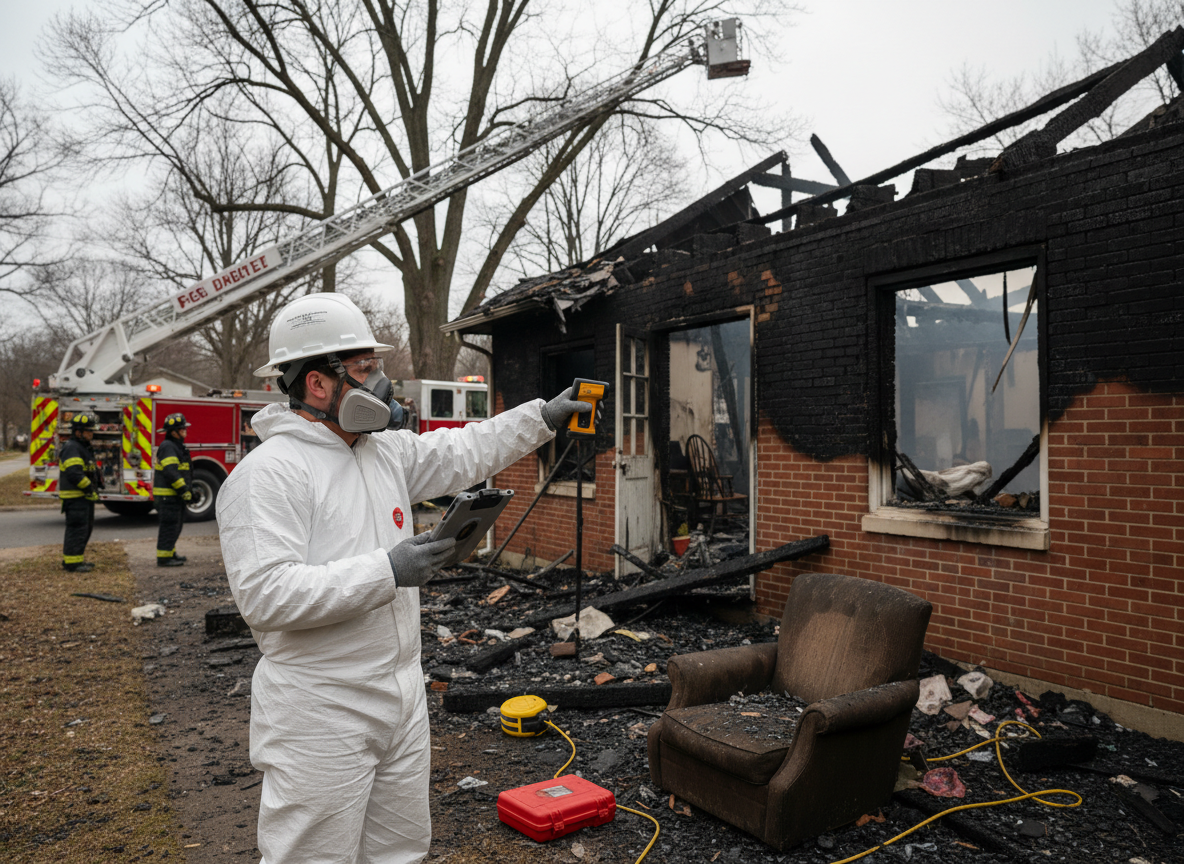
Older homes in Downtown Franklin often feature balloon framing and plaster walls that allow smoke and soot to travel vertically during a fire, while firefighter water can pool in basements and crawl spaces common to Merrimack County properties. Cold winters mean frozen pipes may burst after heat exposure, adding hidden moisture that must be mapped before mold sets in during spring thaw. Assessment includes checking how warm summer humidity interacts with charred wood to accelerate deterioration near landmarks like the Franklin Opera House.
Fire suppression lines frequently introduce hundreds of gallons of water into structures near the Daniel Webster Birthplace, where sloped terrain directs runoff toward foundations. Technicians evaluate electrical systems compromised by both heat and moisture, noting that Laconia and Tilton homes built before widespread code updates often lack modern grounding. Edge cases include soot contamination in HVAC ducts that spreads through four-season temperature swings, requiring targeted sampling rather than visual checks alone.
Documentation covers material types such as oak flooring versus laminate that respond differently to water left after flames are extinguished. Warnings focus on hidden voids in attics where snow load from winter storms can mask structural weakening until a later thaw. This work stays grounded in observable conditions without assuming any licensing or insurance status.
Technician insight
In Franklin, the thing that catches most people out with Emergency Fire Damage Assessment is how snowmelt from cold winters seeps into water already introduced by firefighters in older Downtown Franklin homes, turning a contained incident into widespread hidden moisture along the Merrimack County terrain.
Downtown Franklin Kitchen Fire
A kitchen fire in a pre-1950s home near the Franklin Opera House led to heavy water use by responders. Assessment found pooled moisture under oak floors and soot in HVAC runs that would worsen with spring humidity. Targeted drying and cleaning prevented mold growth before summer temperatures arrived.
Emergency Fire Damage Assessment Services We Offer
✓Smoke Damage Mapping
Identifies soot penetration paths through walls and ceilings in older Franklin homes to prevent ongoing odor issues after fire events.
✓Water Intrusion Assessment
Measures moisture from fire hoses in basements and attics, accounting for snowy winters that slow drying in Merrimack County structures.
✓Structural Integrity Evaluation
Checks load-bearing elements weakened by heat and water near the Franklin Opera House area where older construction predominates.
✓HVAC Contamination Inspection
Assesses ductwork for smoke residue that circulates during warm summers or cold snaps in Tilton and Laconia homes.
✓Electrical Safety Check
Locates wiring damaged by fire and subsequent water exposure common in pre-code Downtown Franklin properties.
Emergency Fire Damage Assessment Cost in Franklin, NH
| Service | Typical Range | What Affects It |
|---|---|---|
| Standard Home Assessment | $250–$450 | Single-story Downtown Franklin properties with easy access |
| Multi-Level or Attic Focus | $400–$650 | Older homes near Daniel Webster Birthplace with balloon framing |
| Post-Suppression Water Check | $300–$500 | Includes basement and crawl space readings after winter fires |
Ranges are typical for Franklin, NH and confirmed with an exact written quote before any work starts.
How it works
- 1
Site Walkthrough
Examine all affected rooms and hidden spaces for visible char, soot lines, and standing water.
- 2
Moisture Meter Readings
Take targeted readings in walls, floors, and ceilings to locate water from suppression efforts.
- 3
Documentation and Photos
Record conditions with notes on material types and local terrain influences like runoff toward foundations.
- 4
Report Delivery
Provide findings with prioritized next steps for water removal and smoke cleanup.
Pricing
Initial assessments typically range from a few hundred dollars depending on home size and access challenges.