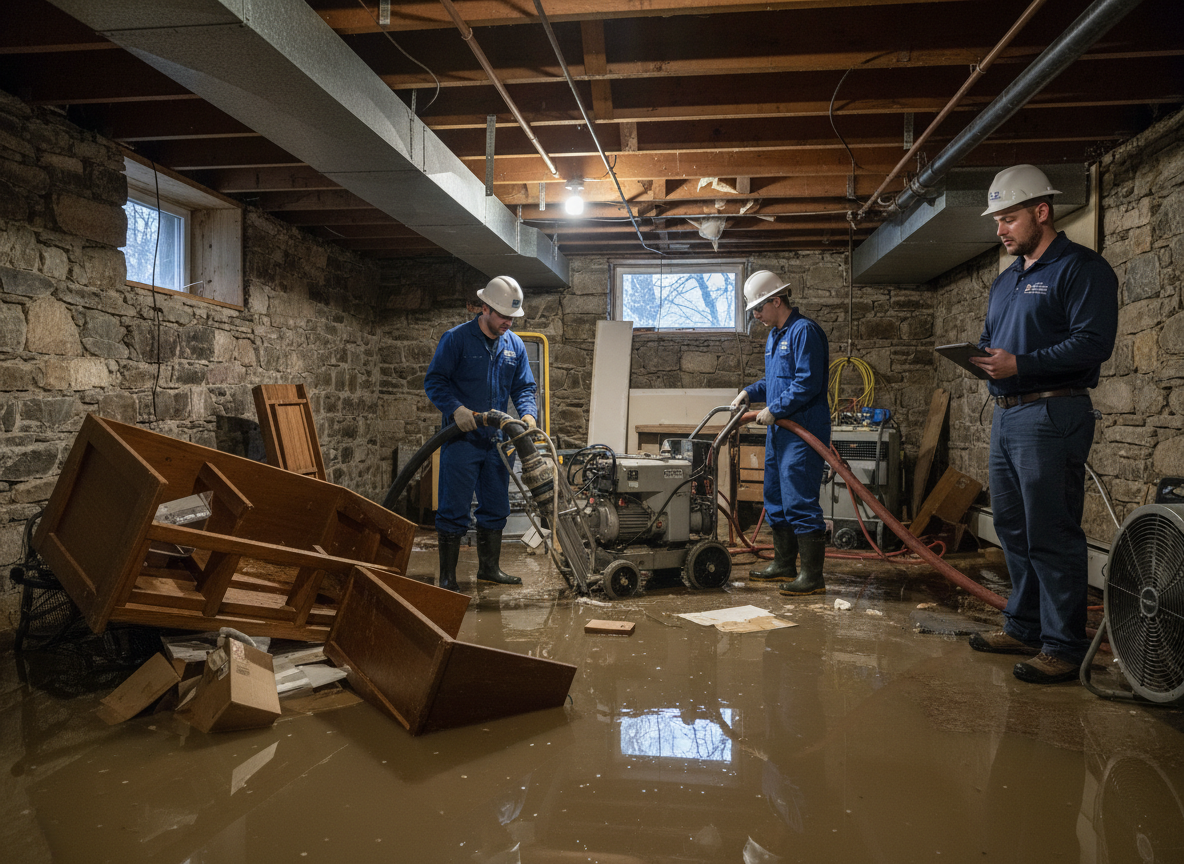
Bristol sits along the edge of Newfound Lake with a mix of older capes and farmhouses on smaller lots that back up to wooded slopes. Winter snow loads melt fast in spring and send water toward foundations that often lack modern French drains. When pipes freeze or ice dams form along the north-facing roofs common on Central Street homes, water finds its way into finished basements before crews arrive. Our trucks reach Bristol via Route 3A from Franklin in under twenty minutes, letting us start extraction the same day the call comes in.
Downtown Bristol properties sit close together with narrow driveways and shared wells that complicate equipment placement. We stage dehumidifiers on the side yards and run hoses to the street so we do not block neighbors. Summer thunderstorms dump heavy rain on already saturated ground near the lake, raising the water table quickly. Homes built before the 1950s often have fieldstone foundations that absorb moisture differently than poured concrete, so we adjust drying times and monitor moisture meters on every stone course.
Around Bristol
We regularly work near:
- 📍Newfound Lake
- 📍Bristol Town Common
- 📍Profile Falls
- 📍Bristol Elementary School
- 📍Central Square
Water Damage Restoration in Bristol — Local Notes
- •Narrow driveways off Main Street limit large equipment access, requiring smaller portable extractors on many Bristol jobs.
- •Older fieldstone foundations near Newfound Lake absorb meltwater differently, so we extend drying times and check every course with meters.
- •Spring snow melt from the hills behind Central Square flows toward low-lying lots that lack modern grading or perimeter drains.
- •Lake-effect humidity in summer keeps indoor moisture high even after extraction, requiring extra dehumidifier days on lakeside streets.